For millions of Indian families, buying medicines is not a one-time decision.
It’s a recurring monthly negotiation between
health, trust and affordability.
While OOP expenditure has improved, it remains a
critical burden. The Economic Survey 2024-25
estimates OOP expenditure has reduced to 39.4%
(from 62.6%).
On average, most Jan Aushadhi
medicines are 90% cheaper than
branded alternatives.
Over 87% of medicines sold are branded
medicines, forcing users to pay premiums of
up to 90% over true generic prices.
"Pharmacy of the World" - India supplies
20% of the global generic medicine
volume.
Let's understand the Role of Jan Aushadhi Scheme -
Case Example of Mrs. Vibha Kapoor (80 Years)
-
Manages multiple chronic conditions: hypertension, diabetes,
hypothyroidism, gastric ulcers, and requires blood thinners. -
Previously purchased medicines from private pharmacies
for ₹1,502/month. - Switched to Jan Aushadhi in 2021.
-
New monthly cost: ₹306 for the same therapeutic regimen.
~80% cost reduction achieved. -
Has used Jan Aushadhi medicines for 3+ years with no adverse
side effects reported
About Jan Aushadhi
The Pradhan Mantri Bhartiya Janaushadhi Pariyojana (PMBJP) aims to cut
out of pocket healthcare costs by giving every Indian access to affordable,
high-quality generic medicines.
BUT
Despite being affordable, Jan Aushadhi struggles at the exact moments when
people need it most
What the Pilot Study revealed
Chronic conditions
make medicine
intake continuous,
home remedies
remain common
Users prioritize
proximity and
price, often mixing
Jan Aushadhi with
other options
Affordable pricing
triggers doubts due
to low awareness
and weak doctor
endorsement
Store environment
and prescription
practices
influence trust
beyond cost
These early signals made it clear that affordability alone does not guarantee adoption.
Issues of trust, accessibility and influence required deeper investigation through contextual inquiry.
Taken together, these observations revealed that Jan Aushadhi’s challenges are not
isolated usability or awareness issues.
They stem from a fragile ecosystem where trust, operational reliability, and cultural
perception intersect , making affordability alone insufficient for sustained adoption.
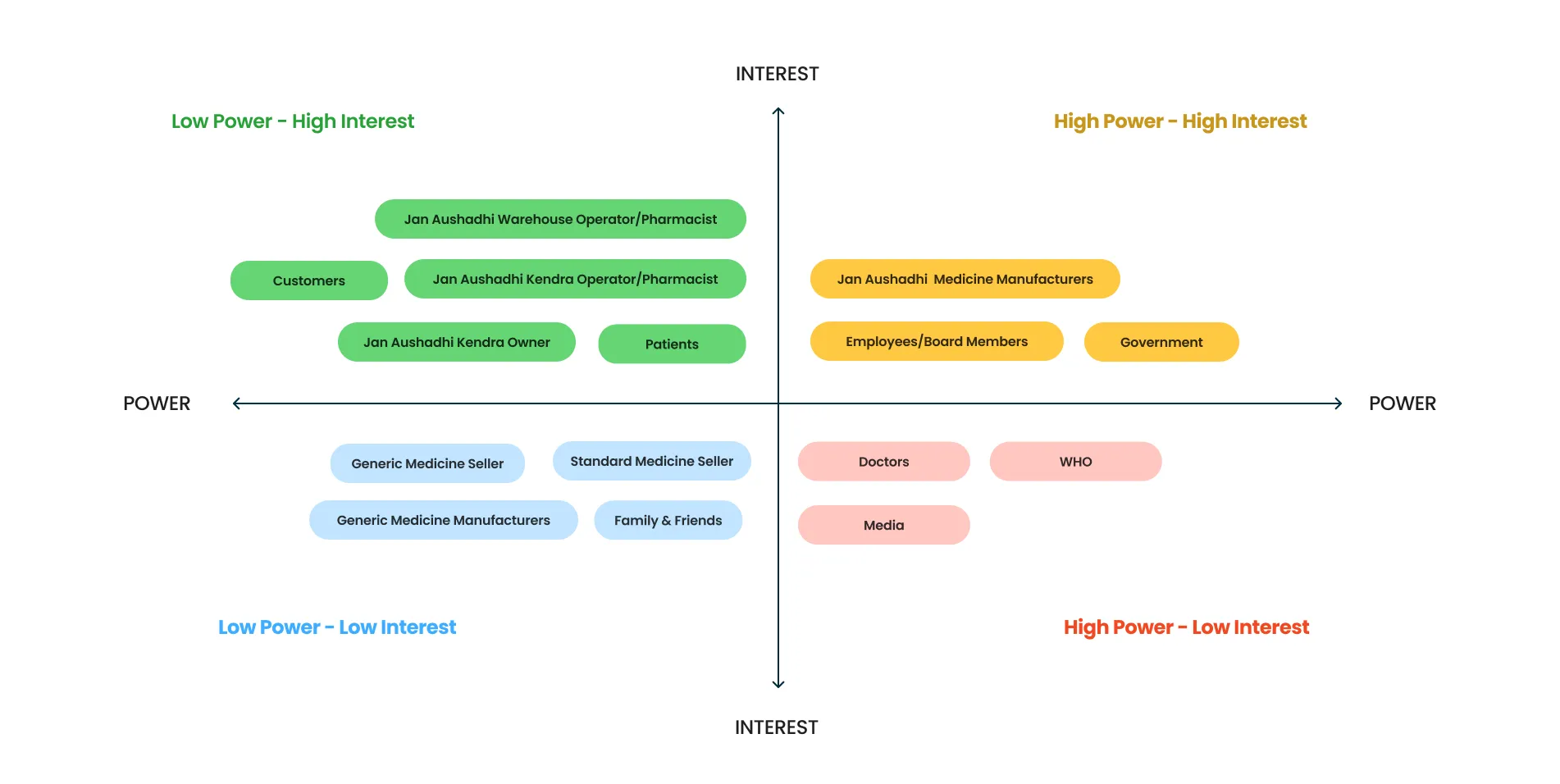
The Ecosystem
Stakeholder Prioritization Matrix
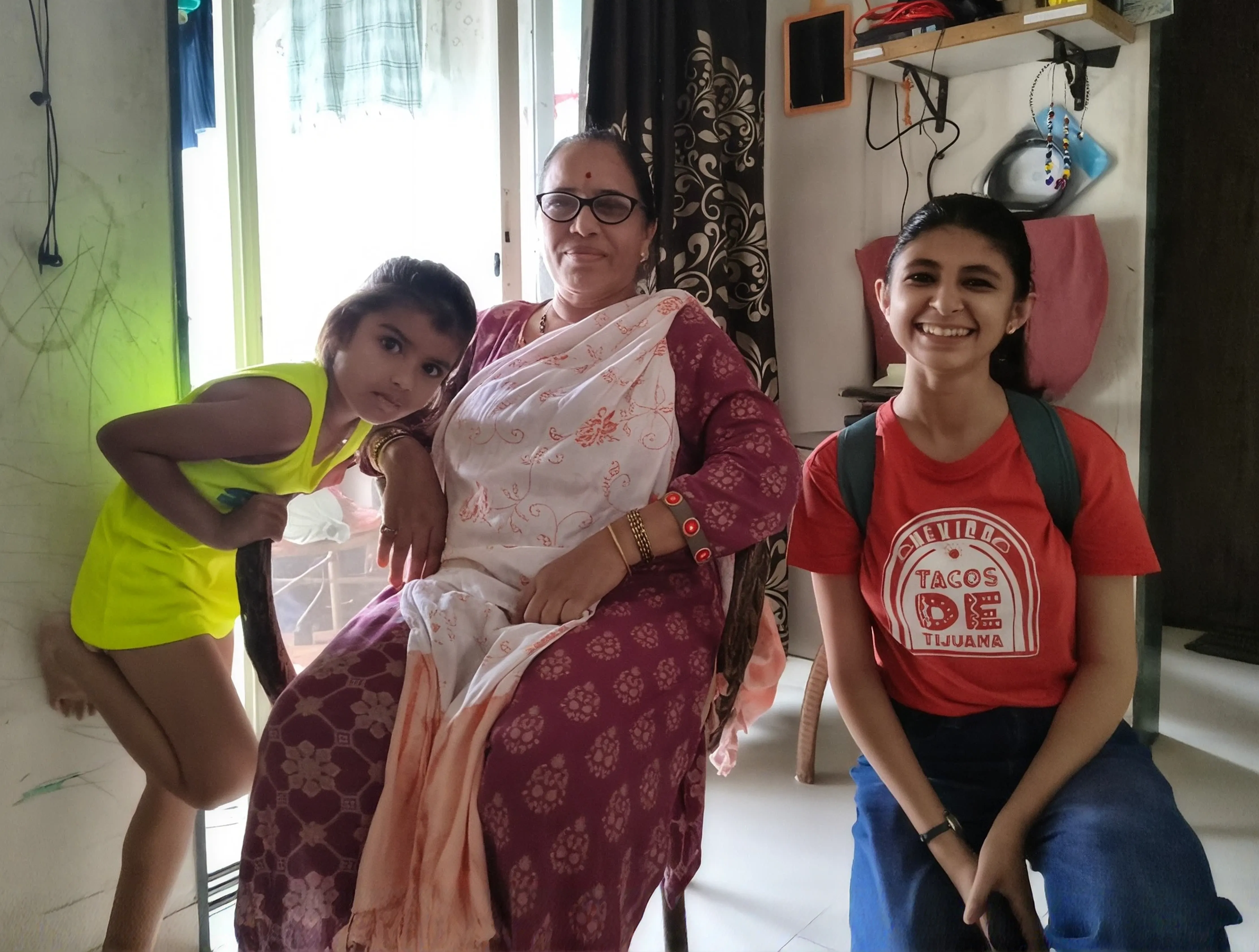
How different users experience the system
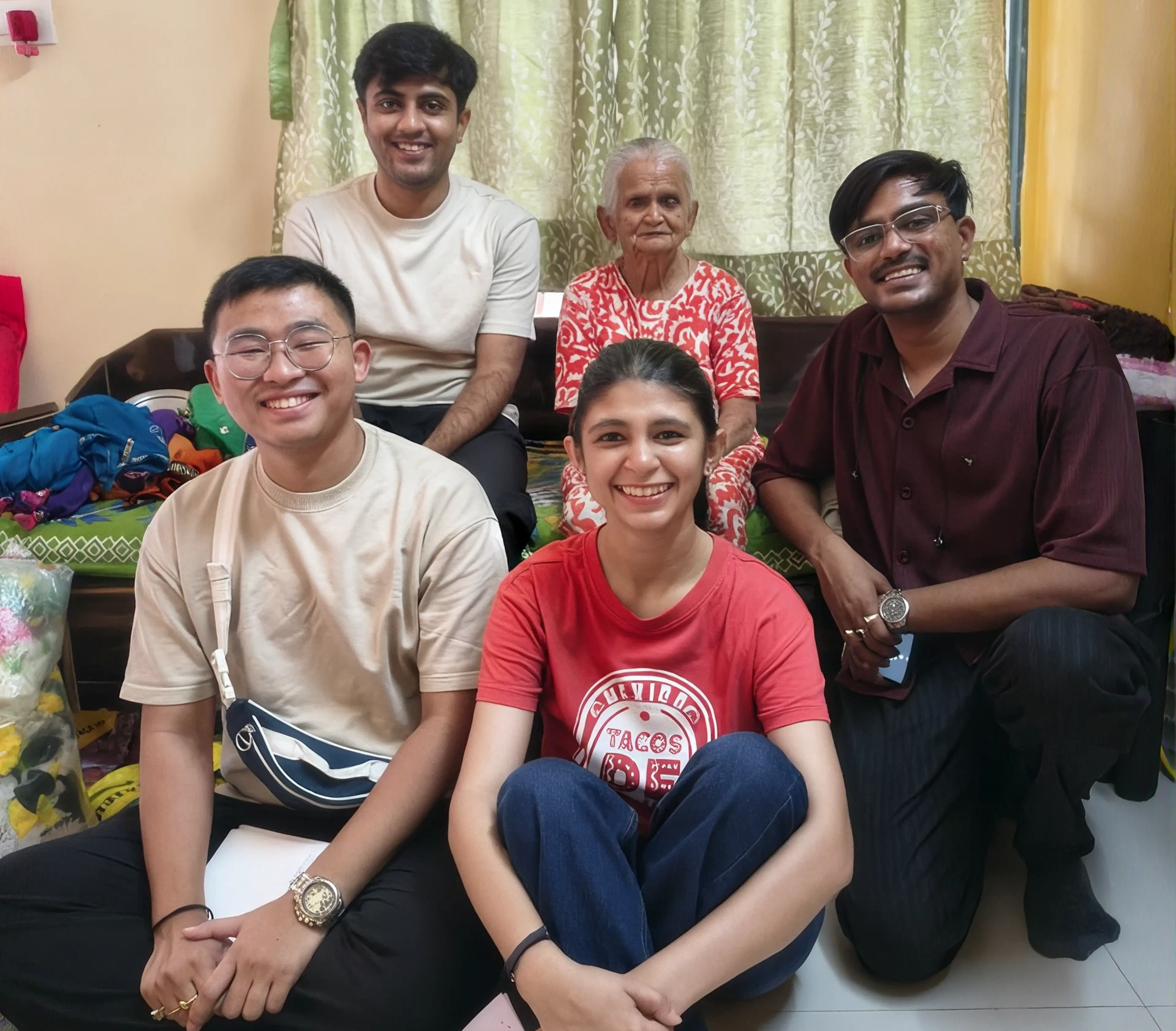
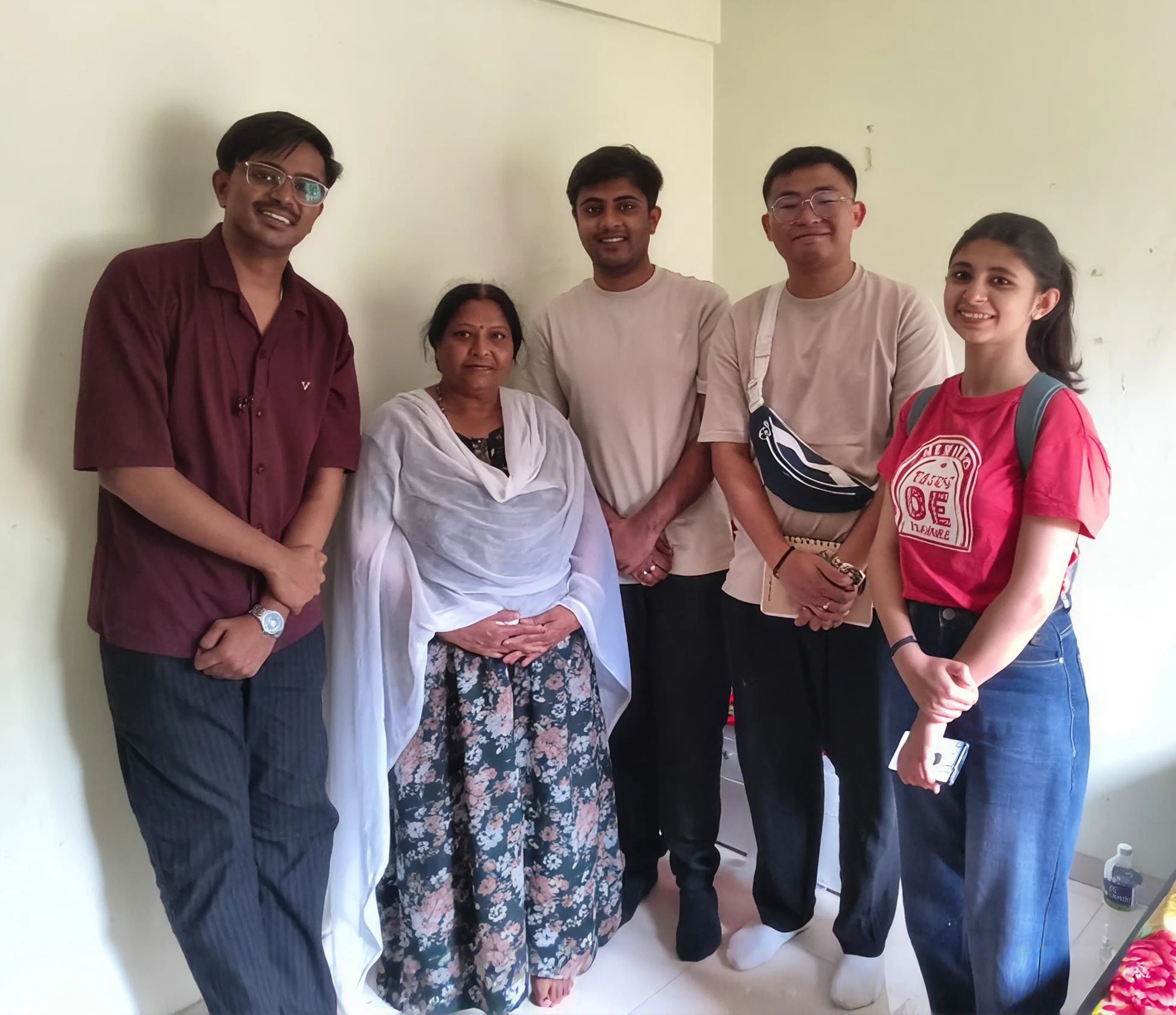
To understand how Jan Aushadhi functions across its ecosystem, we gathered perspectives from four key user groups:
Jan Aushadhi Users, Doctors, Jan Aushadhi Kendra Operators and Non Users.
Jan Aushadhi Users
50% buy both
chronic + regular medicines
65% purchase for
30-day supply at once
Hypertension, Diabetes and Thyroid
Long-term chronic condition users are the core segment of buyers.
Doctors
43% doctors have a habit of prescribing
branded medicines
14% doctors are simply unaware/
misinformed of Jan Aushadhi
Financial incentives and habitual prescribing override empathy for patients.
Jan Aushadhi Kendra Operators
Supply chain delays (biggest
operational issue)
20% app awareness (low adoption
of digital tools)
Expired stock due to low throughput
and no discounts on expired goods.
Operators caught between community need and business viability.
Non Users
57% perceive cheap as low quality
14% are influenced by friends and family
29% follows only doctor's prescription
Quality skepticism and doctor influence leads to adoption blocker for citizens.
Finding the patterns
To move beyond isolated stories and understand the system as a whole, we clustered survey responses, quotes, and observations into themes based on shared needs, motivations, and pain points.
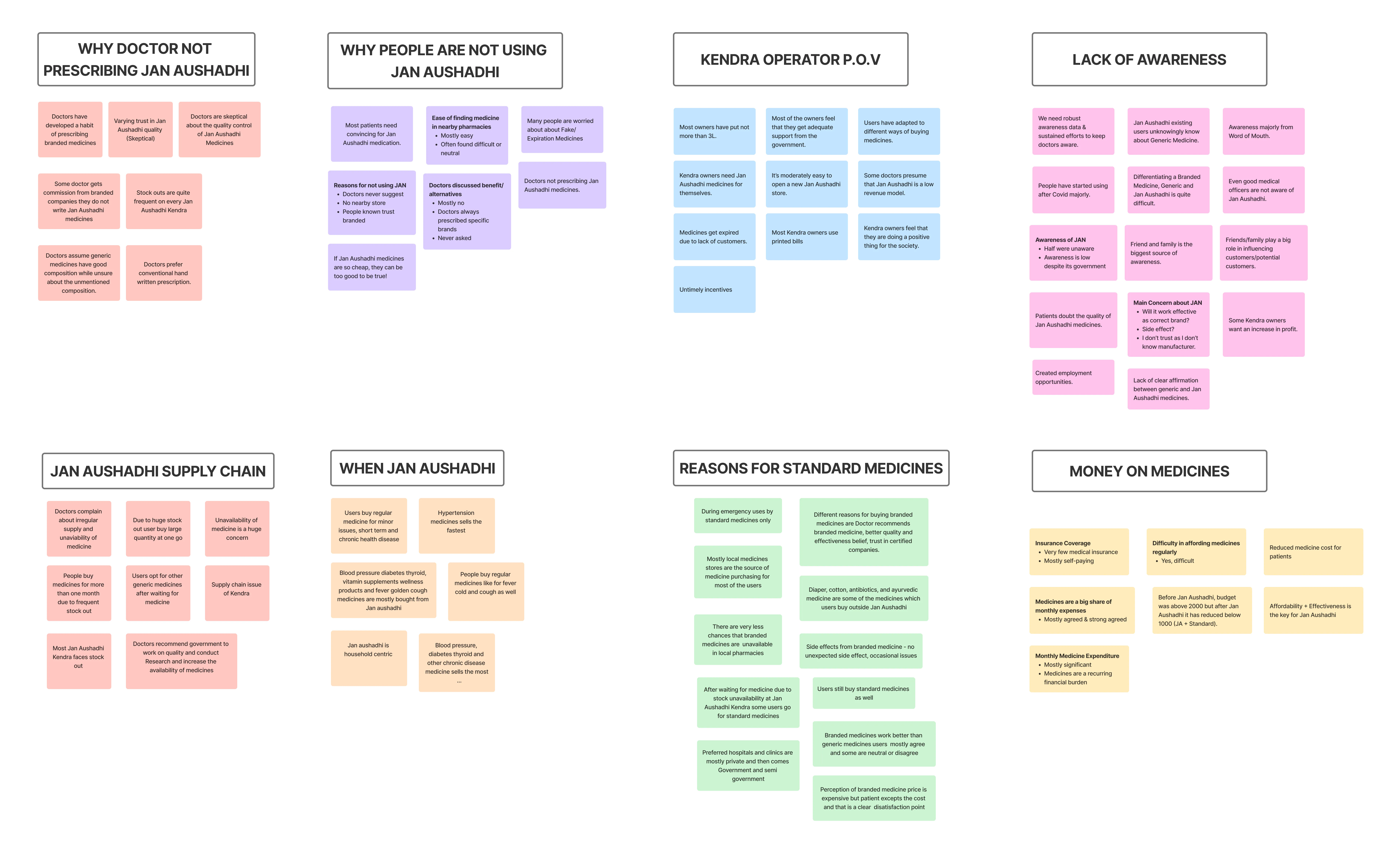
TRUST GAP
"Is it fake or real?"
AWARENESS
Word-of-mouth only, no systematic education
SYSTEM
Doctor gatekeeping and supply chain fragility
AVAILABILITY
Stockouts force expensive alternatives
Understanding the people in the system

Monika Kapoor | 50
The Organised Caregiver
Age: 50
Occupation: Professor
Saves 80% on mother's medicine
Pain: Stockouts + long queues
Behavior: Bulk-buys 3 months' worth, uses photos of medicines for communication
Goal: Uninterrupted supply in one visit

Ramesh Naik | 35
The Kendra Operator
Age: 35
Occupation: Pharmacist
40-55K monthly income
Pain: Expired stock + doctor & patient mistrust
Behavior: Educates patients on composition, checks online verification
Goal: Awareness growth to boost sales
Comparing Jan Aushadhi with market alternatives
Brand Position Map
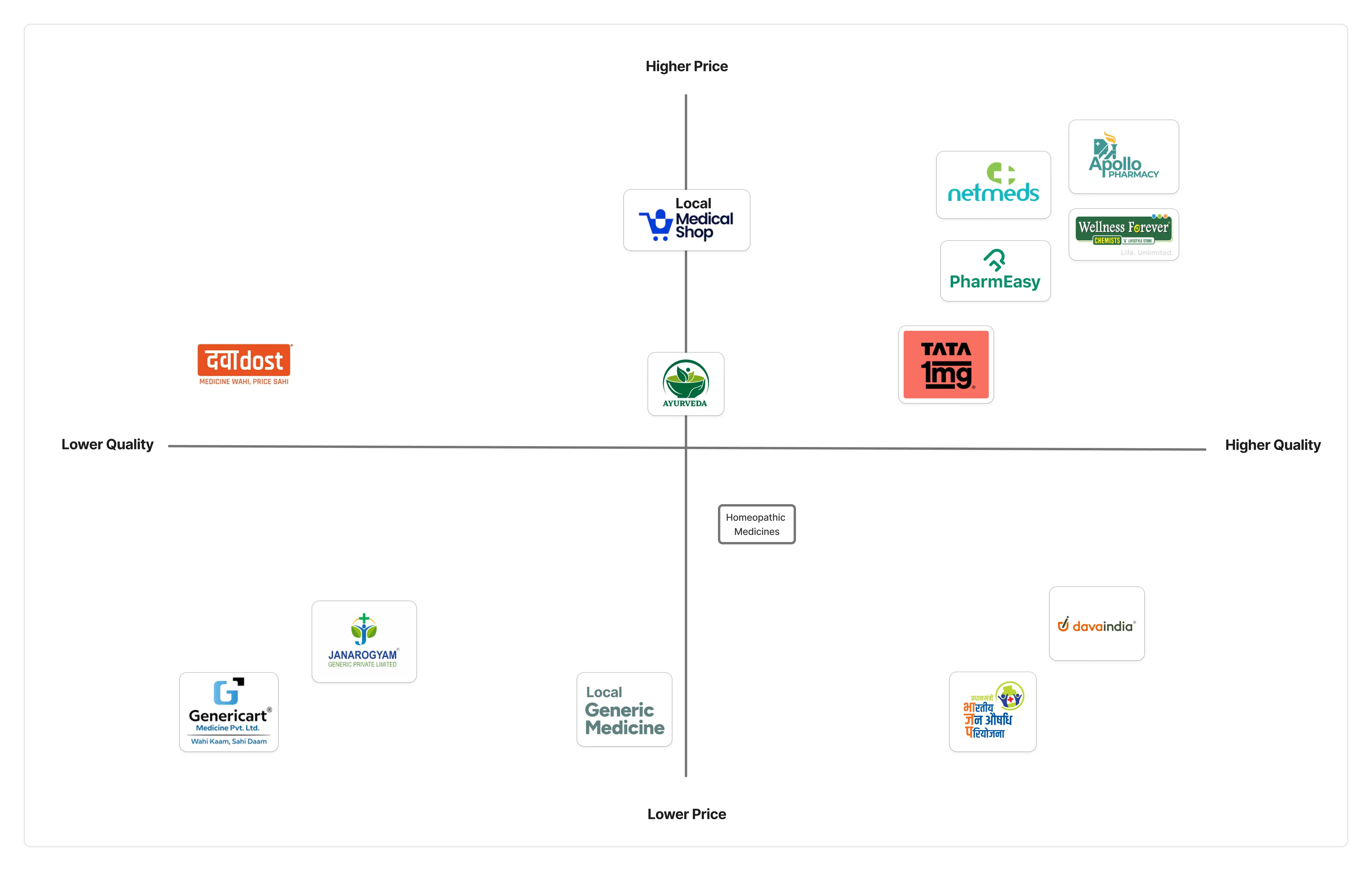
The map highlights a clear perception gap. While Jan Aushadhi occupies a strong low-price position, it is not perceived as high quality when compared to premium digital pharmacies such as Tata 1mg and Apollo.
Local medical shops sit higher on perceived quality despite higher prices, driven by familiarity and trust. This reveals an opportunity for Jan Aushadhi to strengthen its perceived quality and credibility without losing its affordability advantage.
What was really going wrong
While affordability attracts first-time users, it does not ensure continued trust or dependence.
The Jan Aushadhi ecosystem lacks clear, accessible information that helps users confidently evaluate medicine options.
As a result, users remain dependent on doctors and pharmacists for decision-making, and any breakdown in availability, communication, or endorsement pushes them back toward familiar branded alternatives.
Problem statement
"High out-of-pocket spending on medicines is a major burden for Indian households. This challenge is worsened by the lack of accessible information on medicine options and prices, leaving users dependent on doctors and pharmacists. Patients have little to no easy way of finding reliable information, limiting their ability to make informed and cost-effective choices."
Why this matters
Our final problem statement represents the fundamental cause and most significant pain point for consumers, whose dependency on doctors and pharmacists prevents them from making informed, cost-effective choices.
By addressing this information gap, a solution can not only diminish the financial burden but also positively influence the other issues by empowering customers to seek out and demand more affordable options, there by strengthening the entire ecosystem.
Rethinking how access, trust and information connect –
Thinking the solution
Insights from the research revealed that the core challenges – trust, fragmented information, and dependency on intermediaries could not be addressed through a single interface or touchpoint. The problem extended across prescriptions, medicine discovery, purchase, and follow-up.
This led to the exploration of a unified health card system as a way to connect users, doctors, and Jan Aushadhi Kendras through a shared layer of reliable information. Rather than acting as a product on its own, the card functions as an enabling system bridging prescriptions, medicine equivalence, and user history across physical and digital interactions.
Jan Aushadhi Unified Health Card
System and Application
1. Access Medical History
Patient presents the Unified Health Card and gives
consent for the doctor to view relevant medical
history through the clinic software.


2. Create Digital Prescription
Doctor creates an E-Prescription, which is securely
stored in the central system. Handwritten prescriptions
can also be uploaded and digitised through the app.
3. Identify Medicine Composition
The system automatically strips prescribed
medicines down to their exact composition and
identifies the generic medicine.

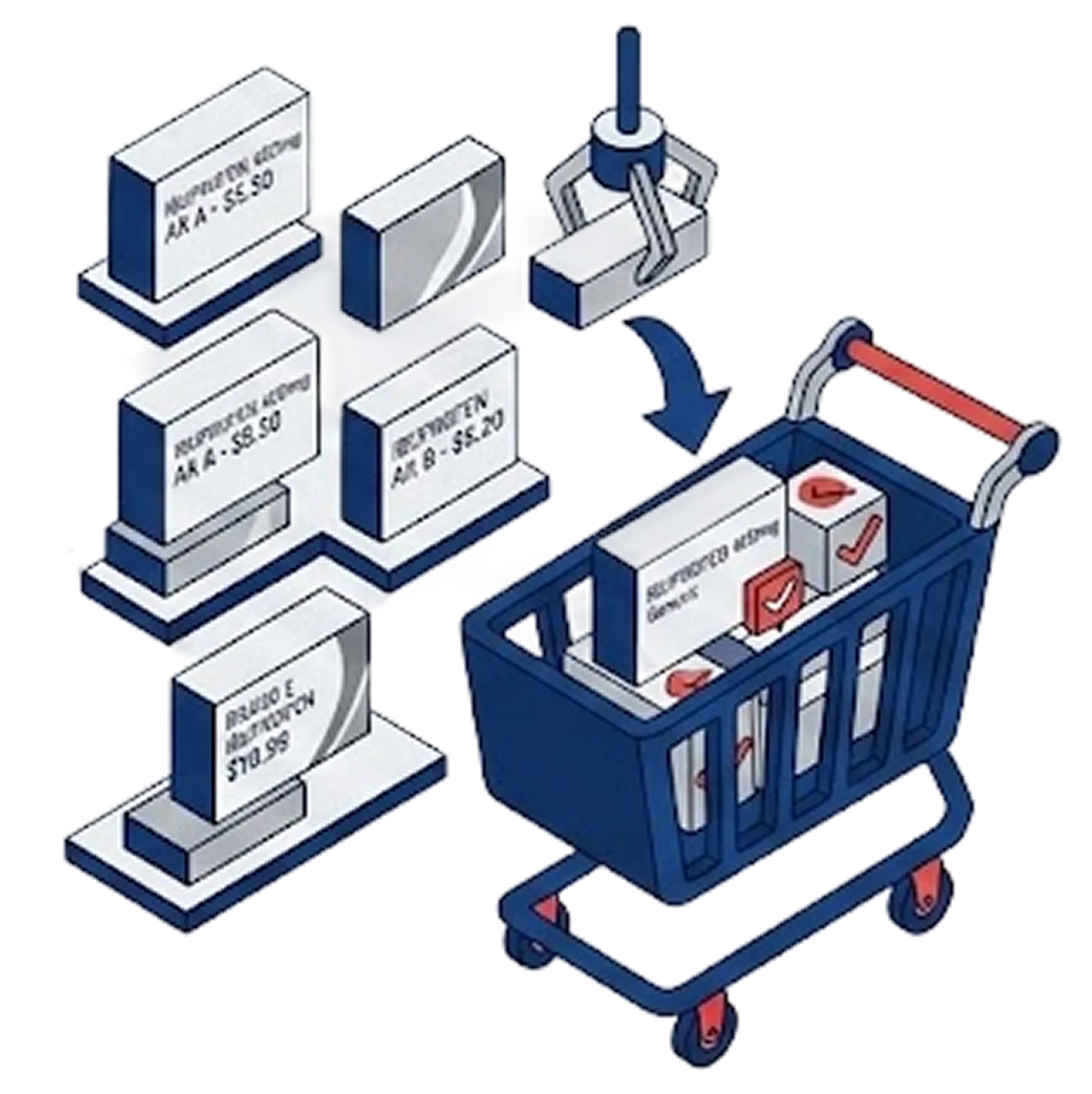
4. Explore & Add Alternatives
Medicines based on the same composition are
added to the cart, allowing to explore different
options and price variations.
5. Share Prescription Securely
Patient can visit any pharmacy, including Jan
Aushadhi Kendras or private stores, and share the
specific prescription through a QR code.

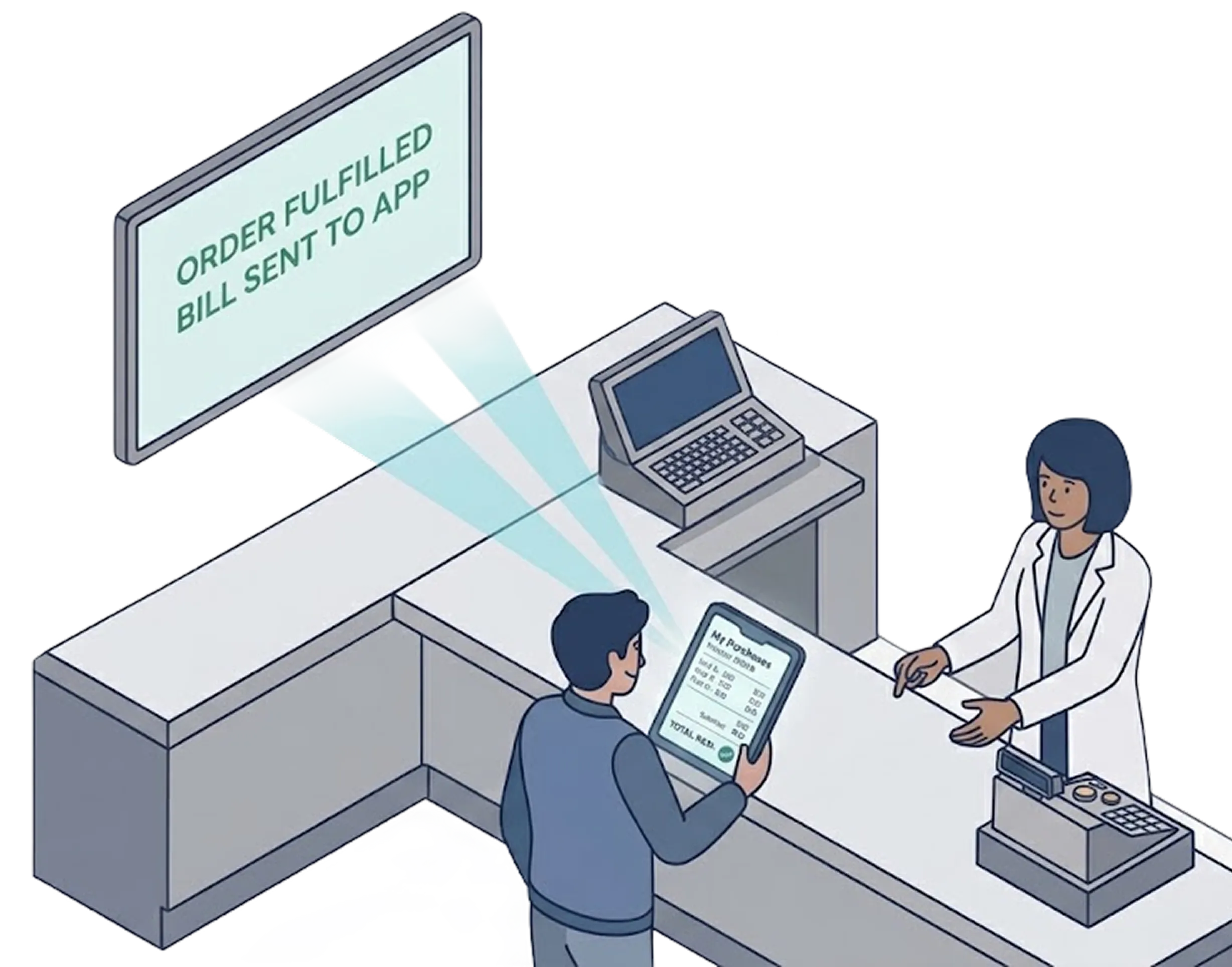
6. Approve Purchase & Receive Bill
Pharmacist requests access to the prescription, which the
patient approves through the app. After dispensing, the
pharmacy sends the digital bill directly to the app.
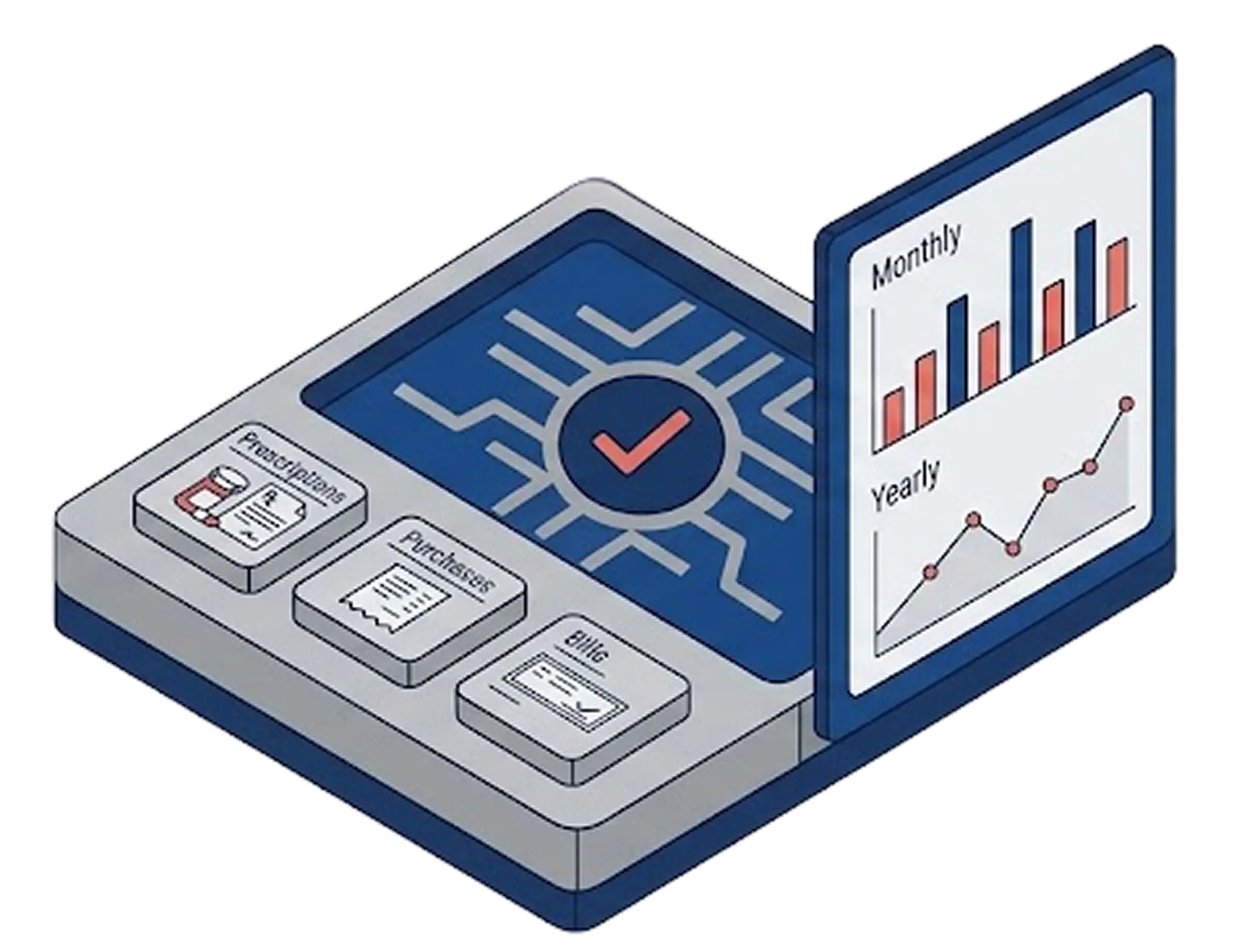
7. Track Medicines & Spending
All prescriptions, purchases, and bills are securely
organized, while the system provides monthly and
yearly medicine-spending insights.